I’ve noticed an increase in interest in human hair Wigs and Toppers. While they are a more expensive option than synthetic alternatives, with proper care, human hair can often last twice as long. Human hair offers a beautifully natural look and feel, though it does require more styling effort compared to the convenient “throw and go” nature of synthetic fibres.
To provide some clarity, here’s an overview of the predominant hair types used in the manufacturing of human hair wigs & toppers.
Understanding Hair Origin
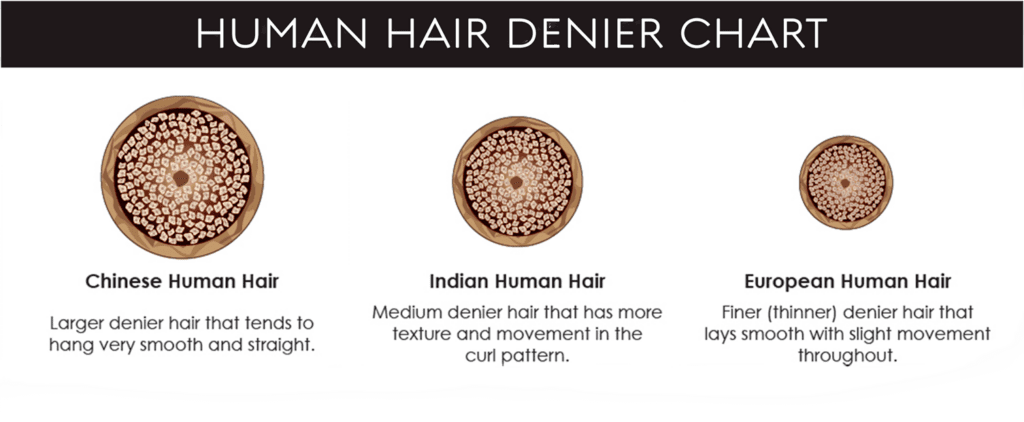
Hair origin refers to the thickness of the hair strand — also known as hair denier. The circumference of the strand affects how the hair moves, behaves, and appears. Ultimately, the best hair type comes down to your personal needs, lifestyle, and styling preferences.
European Hair
European hair is the finest and thinnest of all fibres. Pieces made with 100% European hair are exceptionally soft and move very similarly to biological hair. They blend beautifully with finer natural hair textures, making them an excellent option for topper or wig wearers wanting a lighter, more delicate feel. European hair is among the most expensive options available.
Chinese Hair
Chinese hair has the thickest strand diameter of all hair types, meaning the circumference of each strand is larger. This makes it incredibly strong and durable. It lays beautifully straight and smooth, with a natural shine. With 100% Chinese Remy hair, you can expect exceptional strength and longevity — often outlasting the cap materials themselves when properly cared for.
Indian Hair (often blended with Chinese hair)
Indian hair has a naturally soft wave pattern, allowing it to dry with gentle movement and body. It is commonly blended with Chinese hair — for example, many pieces from Jon Renau use a 50/50 blend of Indian and Chinese hair. This pairing combines the durability and strength of Chinese hair with the natural wave and versatility of Indian hair.
Remy hair vs non-Remy hair
Remy Human Hair
Remy hair is collected and sorted so that all strands travel in the same root-to-tip direction. Keeping the cuticle aligned prevents tangling and ensures smoother movement. Because this sorting process is more labour-intensive, Remy hair pieces are typically more expensive — but offer superior longevity and performance.
Non-Remy Human Hair
With non-Remy hair, there’s no guarantee that the strands are aligned in the same direction. To prevent tangling, the hair is processed to remove part of the cuticle (the outermost layer of the strand). While this makes the hair more manageable initially, it can reduce longevity and may require more maintenance over time.
Choosing the right human hair piece is about balancing budget, desired texture, styling habits, and how much time you want to dedicate to maintenance. If you would like guidance on selecting the best option for your needs, I’m always happy to help.